As I left the Dubrovnik area for a jaunt into Bosnia Herzegovina, I planned to head up the Croatian coast on the D8 and was figuring out whether to go through the Neum Corridor (a narrow; only 9 kms long- chunk of Bosnia Herzegovina that touches the coast) necessitating going through an international border three times, just to end up back in Bosnia Herzegovina, or try the new bridge that avoids the Neum Corridor by hopping over onto the Peljēsac peninsula and then going over the newly opened Peljēsac bridge (July 2022) back to the Croatian mainland. However, checking several GPS apps, it seemed like the D8 was closed and “no alternate routes” existed! So I opted for a route that would take me to the Metkovic border crossing which is inland. However, when I was on this less traveled route through the mountains, my French phone carrier decided that I had run up 60 euro bills by using more data than I was allotted and so they turned off my access. I was suddenly without GPS, map or any real idea of where I was going. It felt like traveling in the 1990s! I drove right through a quarry and totally deserted areas then finally arrived at a border crossing.
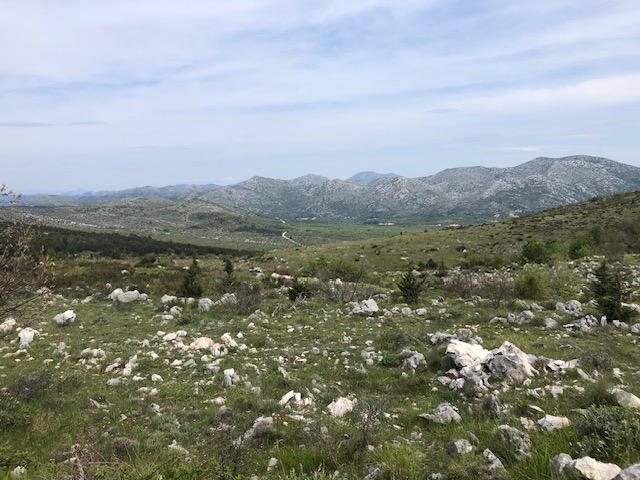
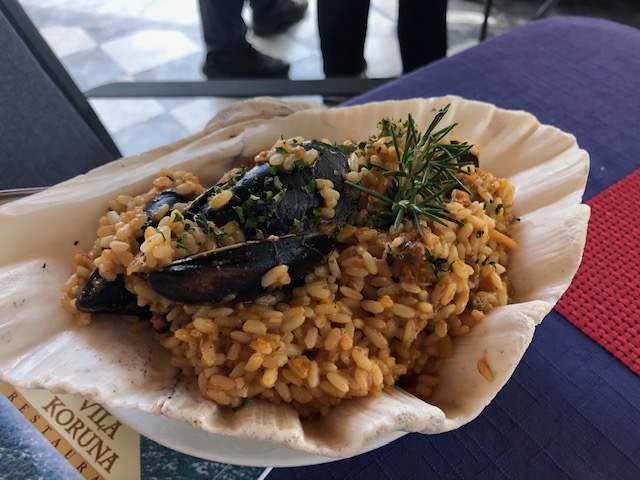
The border guard however took one look at my passport and said, “this isn’t an international border, it is only for locals” and gave me directions to the nearest international border crossing, 10 mins away. I was once again on tiny roads, at one point I drove right through a farmyard, chasing chickens as I went, and finally came to the “blue bridge” he had told me to look for. I was then back on main roads and driving past some beautiful countryside along a natural lake-like bay with mussel and oyster farms dating back to Roman times (mussel risotto for lunch).
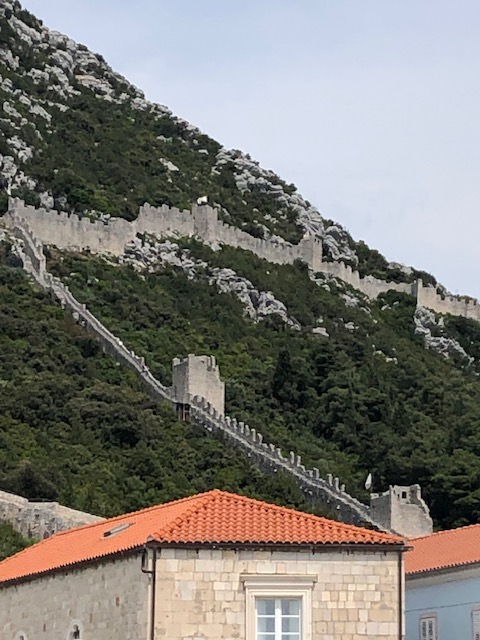
I stopped in Ston, a small 14th C. village with a 5.5 km stone wall (the longest in Europe) which is also known for its production of salt. It turns out that I was now on the Peljesac peninsula and was speeding along a brand new highway and over the new bridge before spending an hour at the border crossing.
There was a marked feeling of economic difference as I crossed the border from Croatia to Bosnia Herzegovina at Metkovic. Buildings got less cared for, there were lots of plastic covered greenhouses and stalls selling things beside the road. However, once I got out of the built up area, there were beautiful natural views as the road goes along a river valley passing the Dervish house and Pocitelj, a walled town that evolved over the 16-18th centuries.

I didn’t stop at either one as I had been driving far longer than I wanted to by then and I just wanted to arrive at my airBNB in Mostar. But finding a specific address in a foreign city without GPS is not easy. I needed a wifi connection so found my way to the famous “old bridge” in Mostar which is in the center of a busy tourist area. I couldn’t even get onto the bridge because it was so crowded, but I did see a young man warming up for a dive (that’s a thing in Mostar), though I didn’t see him jump. I finally found my apartment for the night and was met by the owner, a nice young man who rented out his own apartment (moving into a friend’s) as he was raising money for some traveling.

The previous day’s crowds had put me off Mostar and I knew I’d be coming back past it on my way back, so I decided to head off in the direction of Sarajevo the next morning. I drove past some bombed out buildings, reminders of the terrible war that once ravaged this area.

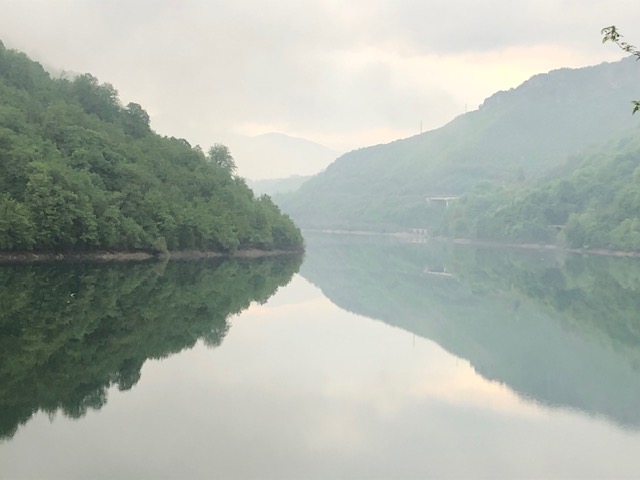
The road to Sarajevo goes along the Neretva river, which has cut a valley through the towering cliffs on both sides. The river is known for its intense emerald green color resulting from the oxidized copper in the rocks and is gorgeous! I was still without GPS (my french phone company website was down so I couldn’t resolve the issue) so when I got to the center of Sarajevo I asked a police officer for directions. Instead he called the airBNB host and told them to come meet me!

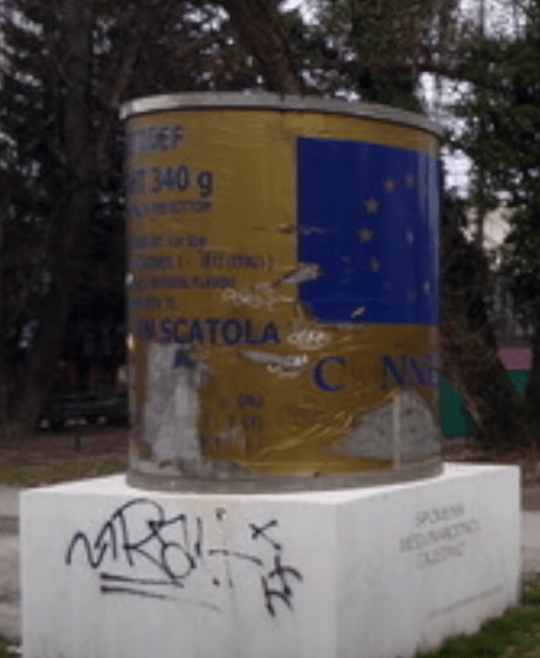
Bosnia Herzegovina is known for the delicate balance it has achieved between the three main factions in their population: Bosnians, Croats and Serbians. Here’s another quick Geography Now video to explain more about how this is achieved. But basically you will see mosques, Catholic churches and orthodox churches side by side throughout the country. It has not always been easy and was at the crux of the war in the area in the 90s. Bosnia Herzegovina had an election in which 63% of the population voted and the vote was 96% in favor of becoming an independent country from Yugoslavia, in which all three ethnicities were welcome. Serbia was determined to keep Yugoslavia together and went to war. 100,000 people were killed and an estimated 12,000–50,000 women were raped. Sarajevo was under siege from 1992-1996 (1,425 days). It was the longest siege of a capital city in the history of modern warfare. 700 people were killed trying to cross the runway (which was the border) to get food until they completed a tunnel under the runway through which they brought in supplies. There were airdrops of supplies as well which gave rise to this sarcastic monument: a statue of a can of the kind of food the EU was dropping off.
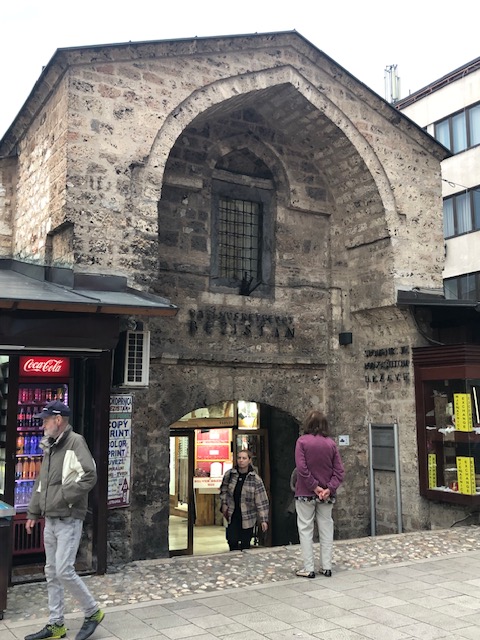
That evening I strolled around the old town looking at all the tourist shops and even bought myself a new purse in the Stari Bazaar.
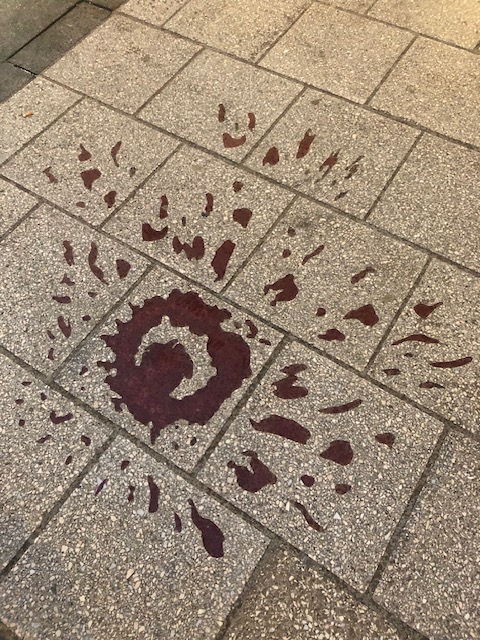
I visited the very touching museum about the siege that was mostly a display of artifacts from daily life along with the first person stories of people’s experiences. It is amazing that all this happened in Europe when I was an adult! They have also commemorated any place a shell landed that caused three or more deaths. They have filled in the holes left by the shell with pink cement and these are called the “Sarajevo Roses”. For dinner I had a typical Bosnian meal of vegetables stuffed with ground beef in a sauce. It was quite good.
Sarajevo is also known in history as the place where Franz Ferdinand and his wife Sofia were assassinated on the latin bridge, precipitating World War 1. Five of the six assassins, were under twenty at the time of the assassination. The political objective of the assassination was to free Bosnia and Herzegovina of Austria-Hungarian rule and establish a common Yugoslavian state. His death triggered Austria-Hungary’s declaration of war against Serbia, which in turn triggered a series of events that eventually led – four weeks after Prince Ferdinand’s death – to Austria-Hungary’s allies and Serbia’s allies declaring war on each other, starting World War I.

I was yearning for something other than cities, so I booked a “glamping” tent along the Neretva river and headed back toward Mostar. The setting was exactly what I wanted, but the tent was perched on a hill and the toilet facilities were at the bottom of the hill, so lots of steps! But it was beautiful and peaceful, but one night was enough 🙂.

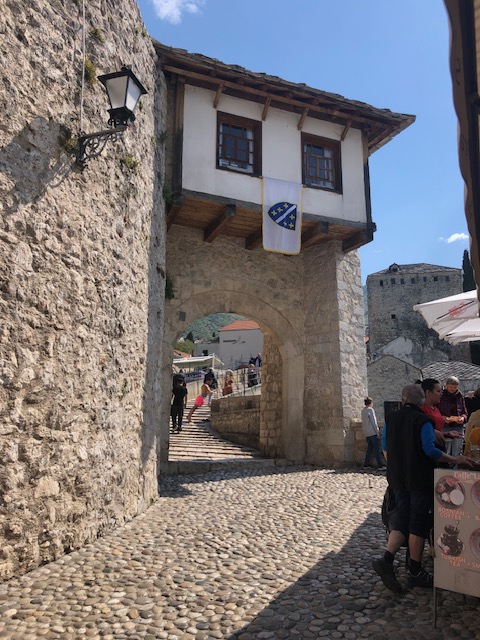
I got an early start and decided to stop in all the nice spots I had whizzed past on my way. I gave Mostar another chance and it was less busy so I did get to cross the old bridge and again saw a young man preparing to dive, but I think they did a long drawn out tease in order to raise money…so I didn’t stay to watch (see him stretching in a hot pink swimsuit?).

I then headed to the Dervish monastery at Blagaj. It was built in 1520 by the Dervish, a mystic branch of Sufi Islam known for rituals that involve various forms of whirling. There weren’t any monks visible, but the house is built in a dramatic location at the foot of a cliff with a river flowing out of a cave at the bottom.

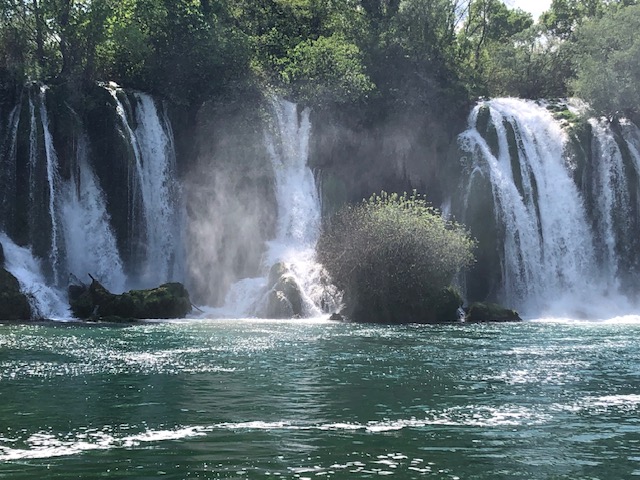
I then headed to the Kravice Falls which were beautiful, but as always seems the case, at the bottom of a long set of steps. Luckily on the way back I saw there was an alternate route and even a little tourist “train”. Best 1 euro I’ve ever spent!
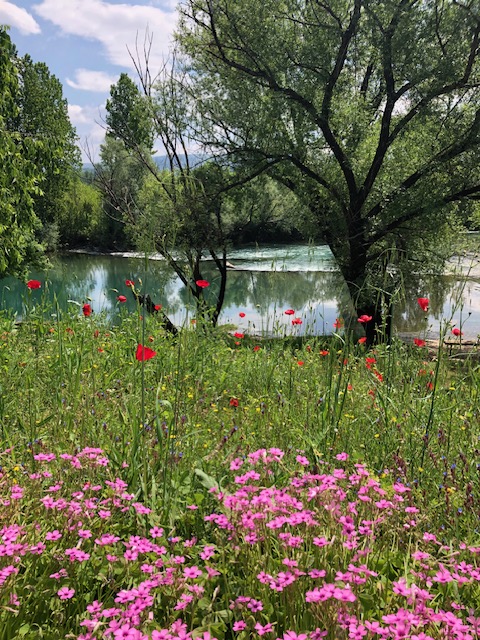
I crossed the border very quickly at Medugorje, a brand new border crossing that connects to the new A1 highway to the coast. By nightfall I was back in Croatia in a coastal town called Omis, near Split. Bosnia Herzegovina was much less expensive that Croatia. Meals cost between 10 and 20 euros rather than the 20-30 I found in Croatia. It also has gorgeous nature and fascinating recent and historical past. At this point, it is not over run with tourism (except Mostar old bridge) so I recommend it as a destination.
 duaime.com